
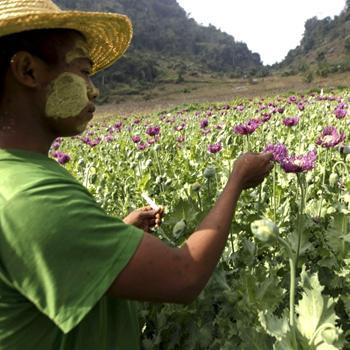
Myanmar has become the world's leading source of illicit opium, following the decline of poppy cultivation in Afghanistan, according to the UN. In the war-torn country, opium farmers and traffickers have free rein. In a recent study on opium in Myanmar, the UN Office on Drugs and Crime (UNODC) found that poppy cultivation increased by 17 percent in 2024-2025 compared to the previous year. The area under cultivation of the illicit crop has risen from 45,200 hectares to 53,100 hectares.
The amount of opium produced per hectare of poppy has not risen at the same rate, according to UNODC. The disparity between opium cultivation and production is due to the growing instability in the country. Rising conflict and insecurity are making it increasingly difficult for farmers to maintain their crops and achieve high opium yields.
A key factor in the strong growth of poppy cultivation in Myanmar is the rising price of opium. This price has more than doubled since 2019. At that time, 1 kg of fresh opium cost $145, compared to $329 today.
The UNODC has also received reports that more heroin is flowing from Myanmar to international markets. These markets previously supplied by the drug from Afghanistan. According to the European Union’s Drugs Agency (EUDA), approximately 60 kg of heroin was seized last year from passengers on commercial flights traveling from Thailand to the EU. This heroin is likely produced in and around Myanmar.
Driven by the escalating conflict, the need for survival, and the lure of rising prices, farmers in Myanmar are being drawn to poppy cultivation. This increase will have significant consequences for Myanmar's future. What happens will impact the pharmaceutical market in the region and far beyond and requires urgent intervention, according to the UNODC.
